KFI Tower Failure
I took a bunch of photos and examined the aftermath of the KFI guy wire failure. I did not take any measurements (hindsight being 20/20) but in my opinion,
the failure is due to the threads on the rod end (male end) being cut undersize. So, even though the threads may have been cut to full depth the overall diameter
was too small for proper engagement. Some of the observations that lead me to this conclusion are:
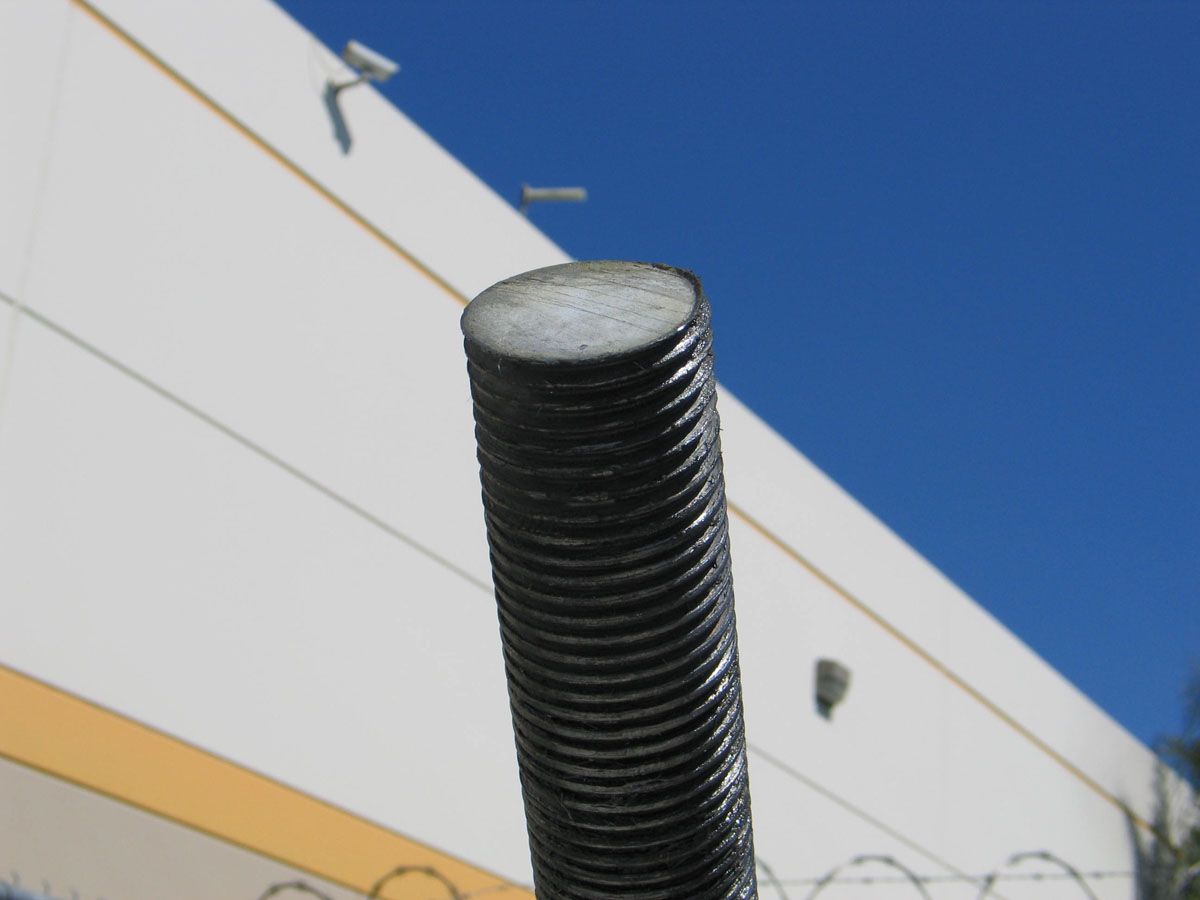
First, the male end of the failed threaded connection was intact as it was manufactured, so the rod material did not separate as some have suggested.
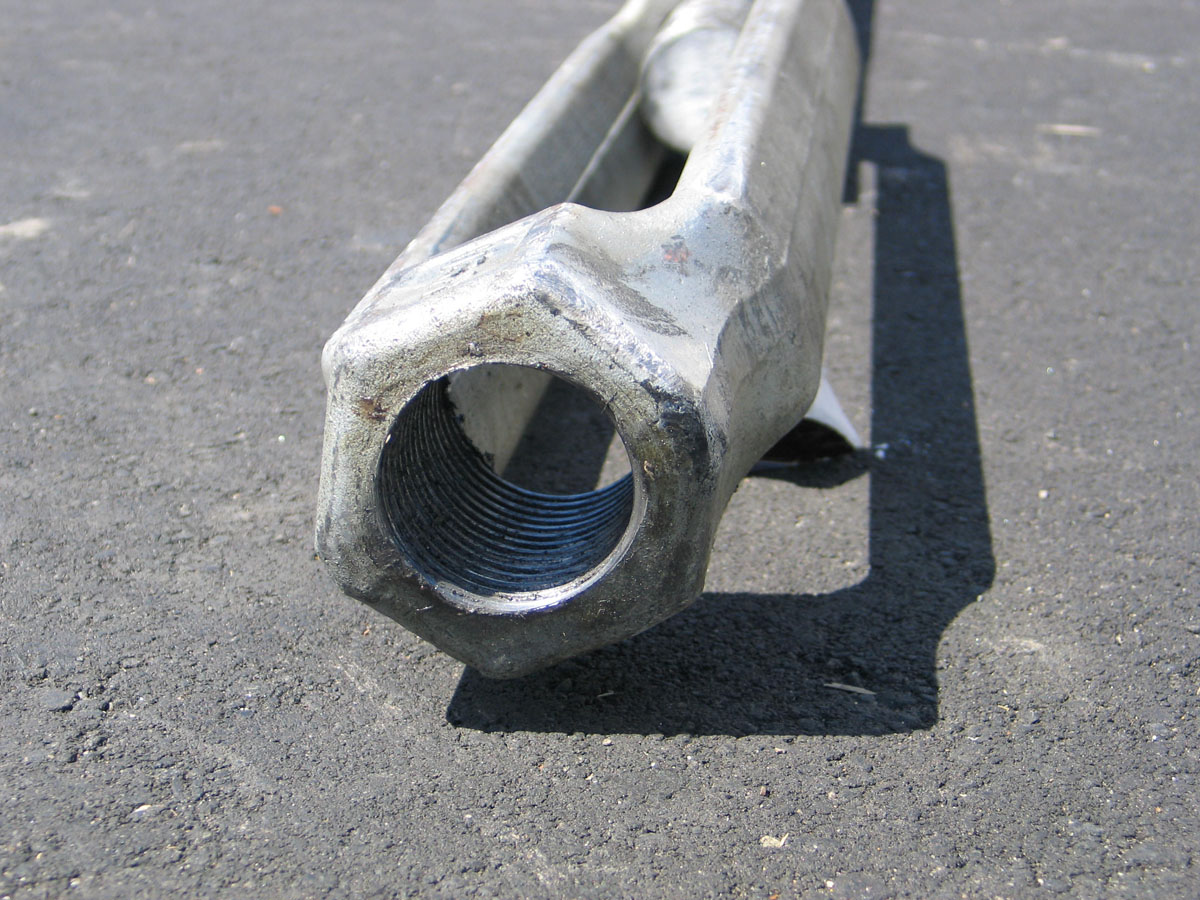
 The female threads in the forged turnbuckle section are in good condition, however the very tops the threads show slight distress and there is metal debris or shavings left
between threads. This turnbuckle section is probably an off the shelf item made in some quantity and thus better QC then the threaded rod, which was most likely
constructed just for this job.
The female threads in the forged turnbuckle section are in good condition, however the very tops the threads show slight distress and there is metal debris or shavings left
between threads. This turnbuckle section is probably an off the shelf item made in some quantity and thus better QC then the threaded rod, which was most likely
constructed just for this job.
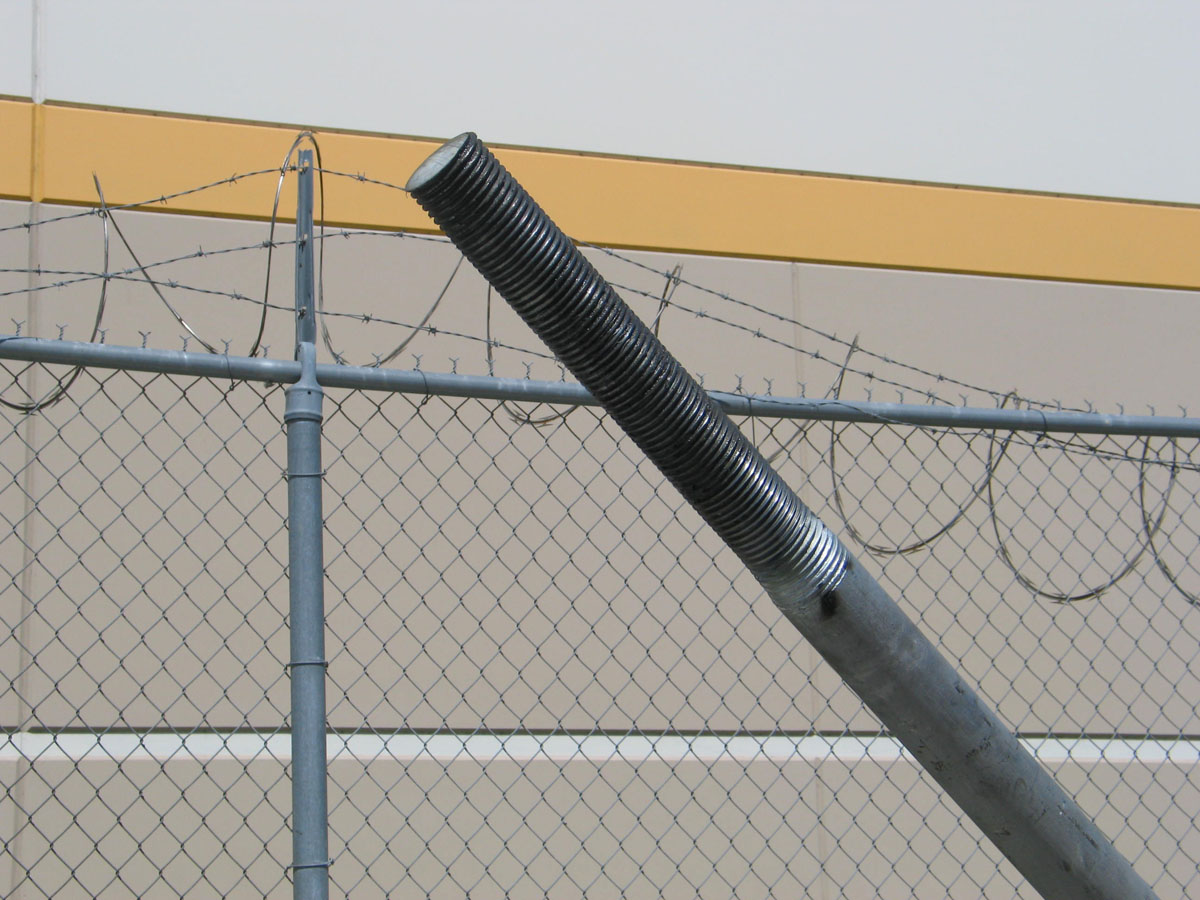
 Close inspection of the male threads on the other end that did not separate indicate that the threads were not cut very cleanly and show signs of galling and tearing during the
thread cutting operation.
Close inspection of the male threads on the other end that did not separate indicate that the threads were not cut very cleanly and show signs of galling and tearing during the
thread cutting operation.
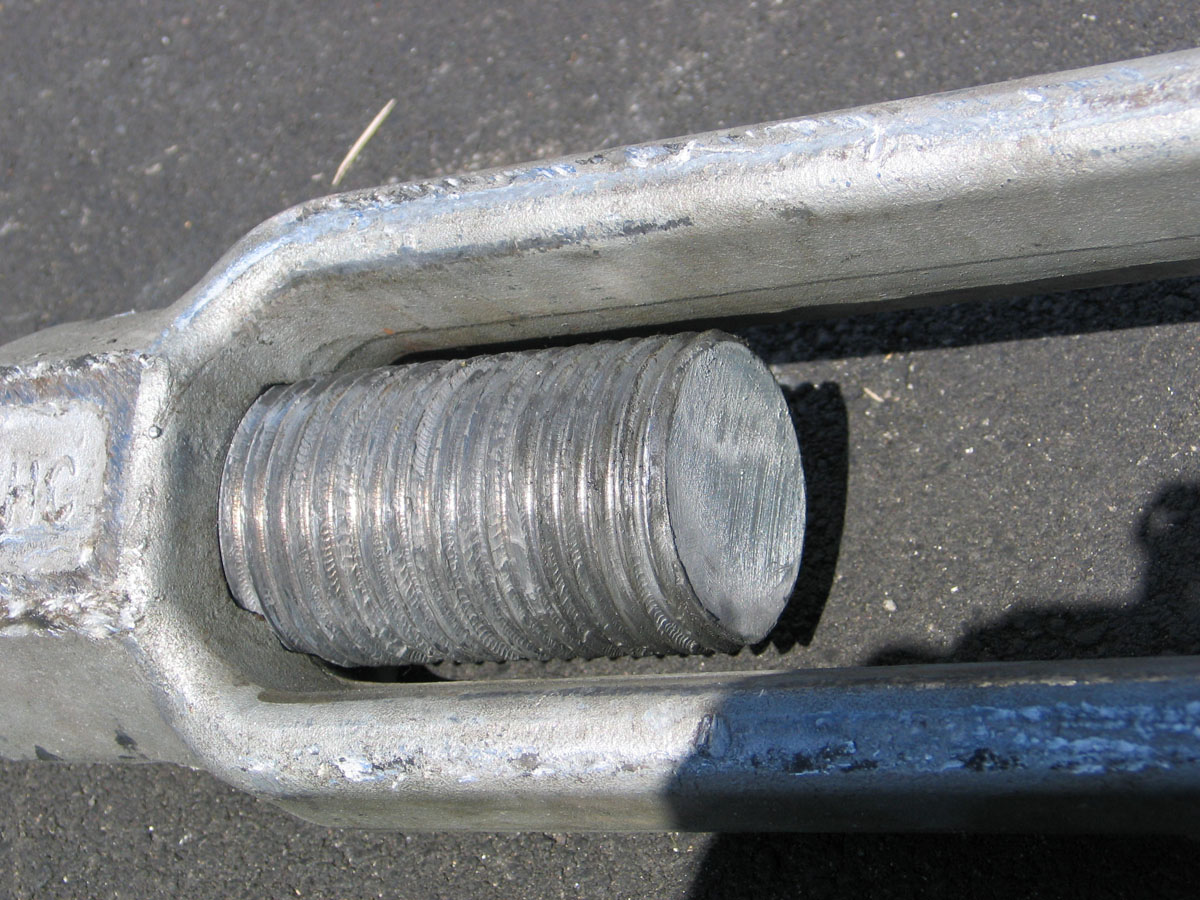 In this photo of the failed end, the threaded diameter is clearly smaller then the unthreaded rod diameter.
 Looking carefully at the failed threads on the rod, there is a fair amount of small metal shaving debris that are on the backside of the thread indicating they were stripped off
a thread tip. There are areas of this threaded section that show damage to the tops of the thread but not the root area which also indicates that the thread did not have full
depth engagement. The damage to the tips of the thread has bent and pulled the tip in the direction that the turn buckle would have pulled off from. Again, this damage does
not extend down to the root of the thread. The threads also do not show any signs of being stretched which would indicate that the material did not fail nor was the
threaded connection overstressed to the point of causing stretch. Another note is that the threaded section that remained intact did not have any lubrication and the
failed section had a fair amount of oil on it, indicating that it may have been hard to turn during assembly. A threaded joint that has a loose fit would have
drastically increased contact pressure on the threads under load that could make it difficult to turn. In conclusion I believe that the thread size was the fault point.
Having said that I am not a structural engineer nor do I claim to be an expert in these matters. I have been working on, building, racing, and repairing high end
sports cars for over 30 years and have seen a lot of hardware failures.
Just my $.02
Looking carefully at the failed threads on the rod, there is a fair amount of small metal shaving debris that are on the backside of the thread indicating they were stripped off
a thread tip. There are areas of this threaded section that show damage to the tops of the thread but not the root area which also indicates that the thread did not have full
depth engagement. The damage to the tips of the thread has bent and pulled the tip in the direction that the turn buckle would have pulled off from. Again, this damage does
not extend down to the root of the thread. The threads also do not show any signs of being stretched which would indicate that the material did not fail nor was the
threaded connection overstressed to the point of causing stretch. Another note is that the threaded section that remained intact did not have any lubrication and the
failed section had a fair amount of oil on it, indicating that it may have been hard to turn during assembly. A threaded joint that has a loose fit would have
drastically increased contact pressure on the threads under load that could make it difficult to turn. In conclusion I believe that the thread size was the fault point.
Having said that I am not a structural engineer nor do I claim to be an expert in these matters. I have been working on, building, racing, and repairing high end
sports cars for over 30 years and have seen a lot of hardware failures.
Just my $.02